

Best Trucks for Towing in Texas: A Buyer’s Guide to Heavy-Duty Pickups
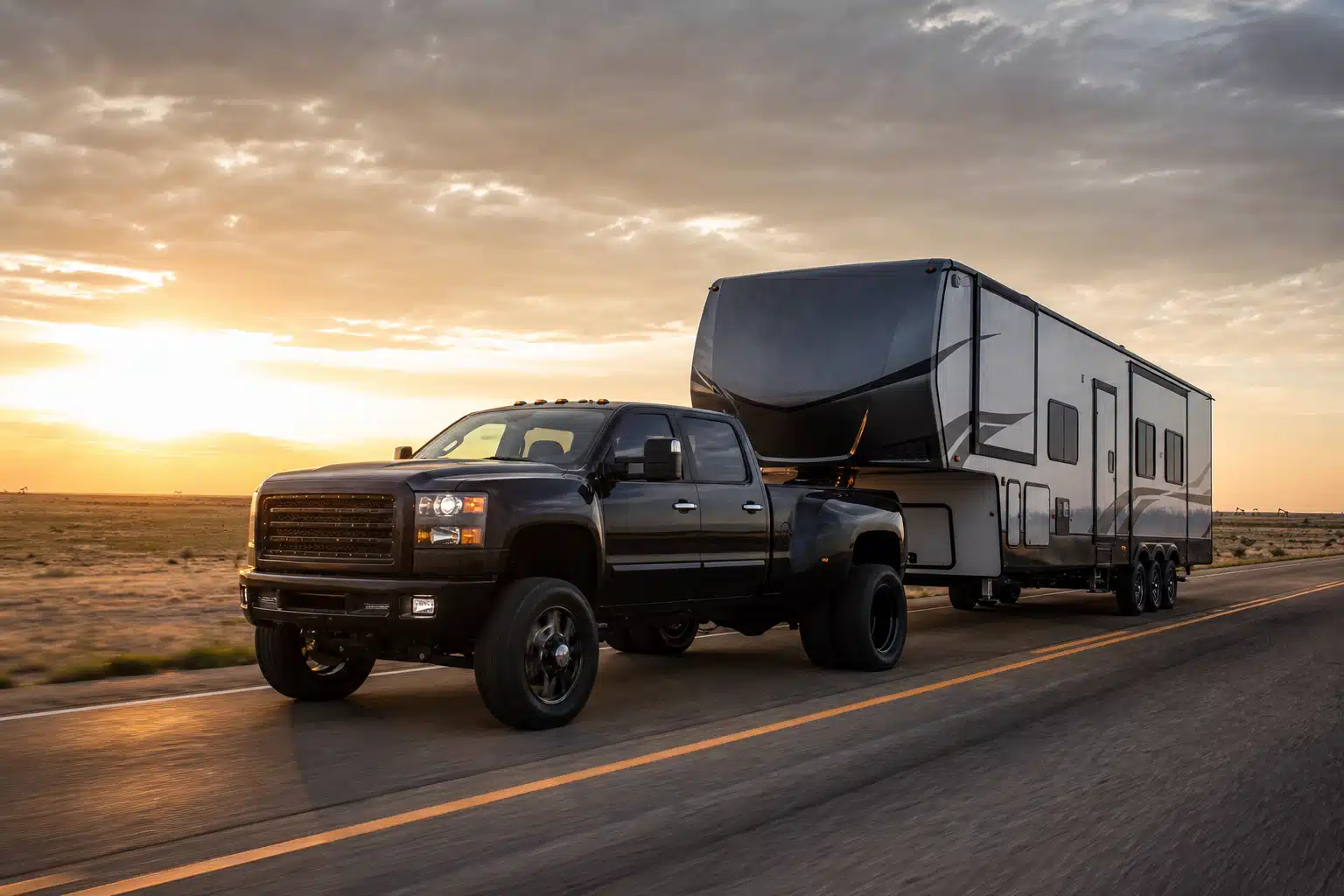
Texas means towing. Whether you are pulling a horse trailer across ranch country, hauling a 40-foot fifth wheel to the coast, or moving heavy equipment between job sites, the truck you drive has to be built for the task. Choosing the wrong truck for your towing needs is expensive, frustrating, and potentially dangerous.
At Cars and Pickups, we specialize in heavy-duty pickups and custom truck builds. We have helped thousands of Texas buyers match the right truck to their towing requirements across our Dallas, Austin, and Houston locations. This guide covers everything you need to know about choosing the best trucks for towing in 2025 and beyond.
Understanding Towing Capacity: What the Numbers Mean
Before comparing trucks, you need to understand what towing numbers actually represent and which ones matter for your situation.
Conventional Towing (Bumper Pull): This is the weight your truck can tow using a standard hitch receiver mounted at the rear bumper. Bumper pull trailers include utility trailers, boat trailers, car haulers, and smaller travel trailers. Most half-ton trucks handle conventional towing needs under 10,000 lbs.
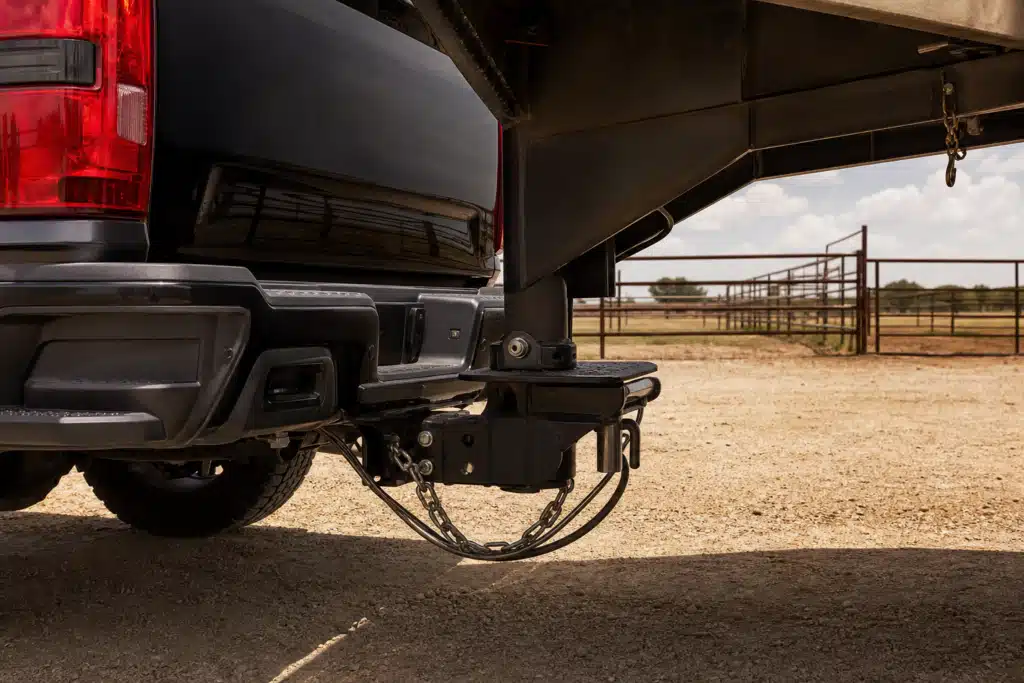
Fifth-Wheel/Gooseneck Towing: This is the weight your truck can tow using a fifth-wheel hitch or gooseneck ball mounted in the truck bed. This setup distributes weight over the rear axle and provides far more stability for heavy loads. If you are towing anything over 14,000 lbs regularly, you want a fifth-wheel or gooseneck configuration on a three-quarter-ton or one-ton truck.
Payload Capacity: This is how much weight you can put IN the truck (bed cargo, passengers, tongue weight from a trailer). Payload is just as important as towing capacity because it limits how much tongue weight or pin weight your truck can safely handle. A truck with 40,000 lbs of towing capacity is useless if its payload cannot handle the 4,000 lbs of pin weight your fifth-wheel puts on the rear axle.
GCWR (Gross Combined Weight Rating): This is the total allowable weight of the truck, passengers, cargo, AND trailer combined. It is the single most important number for safe towing, and it is the one most buyers overlook.
The Best Heavy-Duty Trucks for Towing in 2025
For serious towing in Texas, you need a truck in the three-quarter-ton (2500-class) or one-ton (3500-class) segment. Here are the top contenders:
Ford F-250 / F-350 / F-450 Super Duty
Ford’s Super Duty lineup consistently leads the segment in maximum towing capacity. The numbers are impressive:
- F-250: Up to 22,000 lbs conventional towing, up to 20,000 lbs fifth-wheel
- F-350: Up to 24,000 lbs conventional, up to 38,000 lbs fifth-wheel (with 6.7L Power Stroke diesel)
- F-450: Up to 40,000 lbs fifth-wheel/gooseneck (the highest in the segment)
- Max payload: Up to 7,850 lbs (F-350 Regular Cab)
The 6.7L Power Stroke diesel V8 produces up to 500 hp and 1,200 lb-ft of torque, paired with a 10-speed TorqShift automatic transmission. Ford also offers the 7.3L “Godzilla” gas V8 (430 hp, 485 lb-ft) for buyers who want strong towing without the diesel price premium.
Key towing features include Pro Trailer Backup Assist, onboard scales (available), trailer brake controller, and smart trailer tow connector that monitors trailer tire pressure and lighting.
Ram 2500 / 3500 Heavy Duty
Ram’s heavy-duty trucks pair the legendary 6.7L Cummins turbo diesel inline-six with what many drivers consider the most comfortable cab in the segment:
- Ram 2500: Up to 20,000 lbs conventional towing (with Cummins diesel)
- Ram 3500: Up to 37,100 lbs fifth-wheel/gooseneck (with Cummins High Output)
- Max payload: Up to 7,680 lbs (Ram 3500 Regular Cab)
The standard-output Cummins produces 370 hp and 850 lb-ft of torque, while the High Output variant jumps to 420 hp and 1,075 lb-ft. Ram offers both the Aisin 6-speed automatic (durability-focused) and a newer 8-speed on certain configurations. The available rear air suspension automatically levels the truck when loaded, which is a significant advantage for towing comfort.
For buyers who do not need diesel, the 6.4L HEMI gas V8 (410 hp, 429 lb-ft) provides capable towing at a lower purchase price.
Chevrolet Silverado 2500HD / 3500HD and GMC Sierra HD
GM’s HD twins share the same 6.6L Duramax turbo diesel V8 and Allison 10-speed automatic transmission:
- Silverado/Sierra 2500HD: Up to 18,510 lbs conventional towing
- Silverado/Sierra 3500HD: Up to 36,000 lbs fifth-wheel/gooseneck
- Max payload: Up to 7,442 lbs (3500HD Regular Cab)
The Duramax produces 470 hp and 975 lb-ft of torque, slotting between Ford and Ram in output. GM’s biggest selling point is the available camera system with up to 15 camera views, including a transparent trailer view and a bed-mounted camera for hitching.
Diesel vs Gas: Which Makes Sense for Towing?
This decision comes down to how often you tow and how much weight you are pulling.
Choose diesel if:
- You tow regularly (weekly or more)
- Your typical trailer weight exceeds 10,000 lbs
- You tow long distances on highways
- You need maximum towing capacity
- You plan to keep the truck for 150,000+ miles (diesel engines recoup their higher cost over time)
Choose gas if:
- You tow occasionally (a few times per month or less)
- Your trailer weight stays under 12,000 lbs
- Most of your driving is unloaded around town
- You want lower upfront cost and simpler maintenance
- You do shorter towing trips (under 100 miles)
In Texas, diesel makes sense for most serious towers. The combination of high towing capacity, better fuel economy under load, and engine longevity justifies the $8,000 to $12,000 diesel premium for buyers who put their trucks to work.
How to Match a Truck to Your Trailer
The biggest mistake truck buyers make is choosing a truck based on maximum towing capacity without considering their actual trailer weight. Here is how to do it right:
Step 1: Know your trailer’s loaded weight. Not the empty weight, the actual weight with all your gear, water, propane, and cargo. For travel trailers and fifth wheels, add 1,000 to 2,000 lbs to the dry weight listed in the brochure.
Step 2: Calculate tongue/pin weight. Conventional trailers put 10 to 15% of their weight on the hitch as tongue weight. Fifth wheels put 15 to 25% as pin weight. This weight counts against your truck’s payload capacity.
Step 3: Add passengers and cargo. Four adults and their gear weigh 800 to 1,000 lbs. This also counts against payload.
Step 4: Choose a truck with at least 20% margin. Never buy a truck that maxes out at exactly your trailer weight. You want headroom for safety, comfort, and the inevitable extras you will add over time.
For example: If your fifth-wheel trailer weighs 14,000 lbs loaded and puts 3,500 lbs of pin weight on the hitch, you need a truck with at least 16,800 lbs of fifth-wheel towing capacity AND at least 4,500 lbs of remaining payload after passengers.
Truck Configuration Matters: Cab, Bed, and Axle
Maximum towing numbers in advertisements come from very specific configurations. Changing the cab size, bed length, or axle ratio can significantly change what your truck can tow.
Cab size: Regular cab trucks have the highest payload and towing ratings because they weigh less. Crew cab trucks (the most popular configuration) typically lose 500 to 1,000 lbs of payload compared to regular cab. If you need the absolute maximum capacity, the regular cab configuration wins, but most buyers need the crew cab for family and crew space.
Bed length: Longer beds add weight, which reduces payload. However, a long bed (8-foot) is strongly recommended for fifth-wheel towing because it prevents the trailer from hitting the cab during tight turns. Short bed fifth-wheel setups require a slider hitch or extended pin box, adding cost and complexity.
Axle ratio: Higher numerical ratios (4.10, 4.30) provide more towing power but reduce highway fuel economy. Lower ratios (3.42, 3.73) are better for highway cruising but limit maximum towing capacity. For serious towing, choose the highest available axle ratio.
Single rear wheel (SRW) vs dual rear wheel (DRW): Dually trucks (DRW) have significantly higher towing and payload capacities because the extra rear tires spread the load. If you are towing over 20,000 lbs regularly or hauling heavy pin weights, a dually is the right call. For lighter towing needs, single rear wheel trucks are easier to park, drive, and live with daily.
Essential Towing Features to Look For
Beyond the engine and frame, these features make a real difference in towing safety and comfort:
- Integrated trailer brake controller: Standard on most HD trucks. Allows you to adjust trailer braking force from the cab.
- Tow/haul mode: Changes transmission shift points and engine braking to match towing demands. Always use it when towing.
- Exhaust brake (diesel only): Uses the engine to slow the truck on downhill grades, reducing brake wear and improving control. A must-have for mountain and hill country towing.
- Trailer sway control: Detects and corrects trailer sway by applying individual brakes. Standard on all current HD trucks.
- Backup camera with guidelines: Essential for hitching up. Some trucks now offer trailer-specific camera views and remote tailgate release.
- Blind spot monitoring with trailer coverage: Available on newer models, extends the blind spot detection zone to cover the length of your trailer.
- Air suspension (Ram): Automatically levels the truck when loaded, improving headlight aim, ride quality, and trailer stability.
Towing in Texas: What to Know
Texas has specific considerations for truck buyers who tow:
- Heat: Summer temperatures regularly exceed 100 degrees in Dallas, Austin, and Houston. This puts extreme stress on cooling systems, transmission fluid, and tires. Diesel engines handle sustained heat better than gas engines due to their lower RPM operation and more robust cooling systems.
- Wind: West Texas and Gulf Coast highways are notorious for crosswinds. A heavier truck with a longer wheelbase handles crosswinds better when towing tall trailers. Consider this when choosing between a short and long bed configuration.
- Distance: Texas is massive. A drive from Dallas to Big Bend or South Padre with a trailer is 500+ miles. Fuel range matters. Diesel trucks with their larger tanks (30 to 48 gallons) and better loaded fuel economy can often make these trips with fewer stops.
- Speed limits: Texas highway speed limits reach 75 to 80 MPH in many areas, but smart towing speed is 60 to 65 MPH. Faster speeds increase fuel consumption and reduce trailer stability. The trucks with the best towing composure at highway speed have the longest wheelbases and heaviest curb weights.
New vs Used: Finding Value in the HD Truck Market
New heavy-duty diesel trucks commonly exceed $70,000 to $90,000 for well-equipped Crew Cab models. That puts them out of reach for many buyers. The used market offers significant value:
- 3 to 5 year old trucks typically save $15,000 to $30,000 off new pricing while still having modern safety features and powertrain technology
- Low-mileage diesel trucks (under 80,000 miles) have decades of life left in them with proper maintenance
- Previous generation models (2017 to 2022) offer nearly identical capability to current models at a substantial discount
At Cars and Pickups, we carry a large selection of used heavy-duty trucks in Dallas, Austin, and Houston. Every truck on our lot comes with transparent, no-haggle pricing, no hidden dealer fees, and a no-pressure buying experience. Our team can help you match your towing needs to the right truck and configuration.
Browse Heavy-Duty Trucks at Cars and Pickups
Ready to find the right towing truck? Visit any of our three Texas locations:
- Dallas/Addison (15051 E Beltwood Parkway, Addison TX 75001)
- Austin/Kyle (21701 Interstate 35, Kyle TX 78640)
- Houston/Katy (6103 Hwy Blvd, Katy TX 77494)
Or browse our full inventory online and filter by make, model, and features to find heavy-duty trucks ready for your towing needs.
Frequently Asked Questions
What are the best trucks for towing a fifth wheel?
For most fifth-wheel trailers (12,000 to 20,000 lbs loaded), a Ford F-350, Ram 3500, or Chevy 3500HD with a diesel engine provides the best combination of capability and comfort. If your fifth wheel exceeds 20,000 lbs, consider a dually (DRW) configuration for maximum stability and payload.
Do I need a one-ton truck for towing?
Not always. A three-quarter-ton truck (F-250, Ram 2500, Silverado 2500HD) handles most trailers under 16,000 lbs with ease. One-ton trucks (F-350/450, Ram 3500, 3500HD) become necessary when you need maximum towing capacity, higher payload for heavy pin weights, or are towing over 20,000 lbs consistently.
How much does a diesel truck cost compared to gas?
The diesel engine option typically adds $8,000 to $12,000 to the sticker price of a new HD truck. On the used market, diesel trucks command a $5,000 to $10,000 premium over their gas equivalents. The cost difference narrows over time due to diesel’s better fuel economy under load and higher resale value.
What maintenance does a towing truck need?
Trucks used for regular towing need more frequent oil changes (every 5,000 to 7,500 miles instead of 10,000), transmission fluid service every 30,000 to 60,000 miles, and regular brake inspections. Diesel trucks also need fuel filter replacements every 15,000 to 20,000 miles and DEF fluid refills.
Is a lifted truck good for towing?
Mild lifts (2 to 4 inches) generally do not significantly impact towing capability, though they may slightly reduce stability. Larger lifts (6+ inches) can affect towing geometry, tongue/pin weight distribution, and require adjustments to ensure safe towing. If you want both a lifted look and towing capability, talk to our team about builds that balance both. Learn more in our guide to lifted trucks for sale in Texas.